Starting on January 17, 2026 South Africa will introduce new national banking rules that limit the amount of cash people can withdraw each day & week from ATMs and debit cards. The South African Reserve Bank (SARB) has partnered with the country’s main commercial banks to develop this cash limit policy. The goal is to reduce fraud and money laundering as well as illegal cash transactions. This significant change will especially impact pensioners who receive grants along with small business owners and low-income families who rely heavily on cash for their daily purchases. The withdrawal restrictions will affect all major banks in South Africa including ABSA and FNB as well as Nedbank and Standard Bank & Capitec. Customers in both cities and rural areas will need to adapt to these changes. People in South Africa should familiarize themselves with the new daily and weekly withdrawal limits. They also need to understand what penalty fees might be charged if they exceed these limits. Also it would be wise to explore digital payment methods as an alternative way to manage finances safely under the new regulations.
Why the Government Is Introducing New Cash Withdrawal Rules
The South African government and the South African Reserve Bank (SARB) have provided clear explanations for introducing this new banking regulation. The main goal is to improve financial security and update how people use cash throughout the nation. Officials aim to prevent money laundering and stop illegal cash transfers while making it easier to track large withdrawals. The policy promotes the use of digital payments and card transactions instead of cash. It also helps banks spend less money on filling ATMs & reduces the chance of theft. The regulation specifically aims to protect SASSA grants and pension payments from fraud and criminal schemes. This change brings South Africa closer to international banking standards where limits on cash transactions help create safer and more transparent financial systems.

Updated Cash Withdrawal Limits Explained
Banks have announced new withdrawal limits that vary based on account type and customer status. The changes will begin on January 17 2026. Different banking profiles will have different maximum amounts but all share the same purpose of reducing large cash withdrawals while maintaining reasonable access for customers. The updated limits cover both daily and weekly transactions and aim to provide a balance between ease of use and safety. Each bank will inform its customers about their specific limits to make sure everyone understands and follows the new rules.

| Account Category | Applicable Bank | Maximum Daily ATM Withdrawal | Maximum Weekly ATM Withdrawal | Daily Card Spending Limit | Total Monthly Cash Cap |
|---|---|---|---|---|---|
| Standard Savings Customers | All Major Banks | R2,000 | R10,000 | R3,000 | R40,000 |
| SASSA Grant Recipients | Postbank / FNB | R1,500 | R6,000 | R2,000 | R25,000 |
| Pension & Retirement Accounts | All Major Banks | R1,000 | R4,000 | R1,500 | R20,000 |
| Business & SME Accounts | Commercial Banks | R5,000 | R25,000 | R10,000 | R60,000 |
| Premium & High-Value Clients | All Major Banks | R8,000 | R40,000 | R15,000 | R100,000 |
| Capitec Global One Account Holders | Capitec Bank | R2,500 | R12,500 | R3,000 | R45,000 |
| Students & Youth Accounts | All Major Banks | R1,000 | R3,000 | R1,500 | R15,000 |
| Senior Citizens (60+) | All Major Banks | R1,200 | R4,500 | R1,800 | R18,000 |
Impact on SASSA Grant Recipients and Pensioners
SASSA beneficiaries & pensioners face the biggest challenges from these changes. This is especially true for people living in rural areas or those who struggle to access digital services. The government has stated that SASSA cards will keep working as usual for grant payments. The withdrawal caps exist to stop large cash withdrawals that often lead to fraud. Card swipes at retail stores & online transactions remain unaffected by the ATM limits. Beneficiaries should consider using Shoprite Pick n Pay and Boxer for cash withdrawals with their cards because these stores charge very low transaction fees.
| Transaction Method | Availability | Maximum Limit | Applicable Charges | Best Usage Advice |
|---|---|---|---|---|
| ATM Cash Withdrawal | Permitted | R1,500 per day | R10 to R25 per transaction | Limit usage to avoid extra fees |
| In-Store Card Payment | Fully Allowed | No fixed limit | Usually free or very low | Recommended for daily shopping |
| Post Office Cash Access | Restricted | Up to R1,000 | Depends on branch rules | Confirm service before visiting |
| Electronic Funds Transfer (EFT) | Available | Up to R25,000 per month | R1.50 to R5.00 per transfer | Ideal for non-cash payments |
| Mobile Cash Send | Enabled | R1,000 per day | Standard bank fees apply | Use only when urgently needed |
Grant recipients will continue to have access to several withdrawal options including cash-outs at retail stores and regular card payments. Officials are encouraging these methods as they offer better security and lower costs compared to making frequent ATM withdrawals in areas where safety concerns exist.

Penalties for Exceeding the New Withdrawal Caps
South African banks will use two types of limits under the new rules. Soft caps can be exceeded for a short time but will result in extra charges. Hard caps cannot be exceeded at all. Customers who go over soft limits may pay penalty fees between R20 and R50 for each transaction. If someone reaches a hard cap their card might be suspended temporarily. Accounts that show repeated high cash activity may be flagged and reported to SARB. Customers who expect to need unusually large amounts of cash for things like funerals or major events should contact their banks beforehand to ask for temporary exemptions.
Official Statements from Government and SARB
Finance Minister Enoch Godongwana and SARB Governor Lesetja Kganyago have explained that the regulation aims to modernize the financial system & protect consumers. Official data shows that 60% of fraud cases involve large cash withdrawals. The authorities have confirmed their plan to digitize the economy while making sure people can still access their money. Postbank & SAPO are working to install more ATMs in rural areas and a special task force is collecting public feedback to improve the implementation.
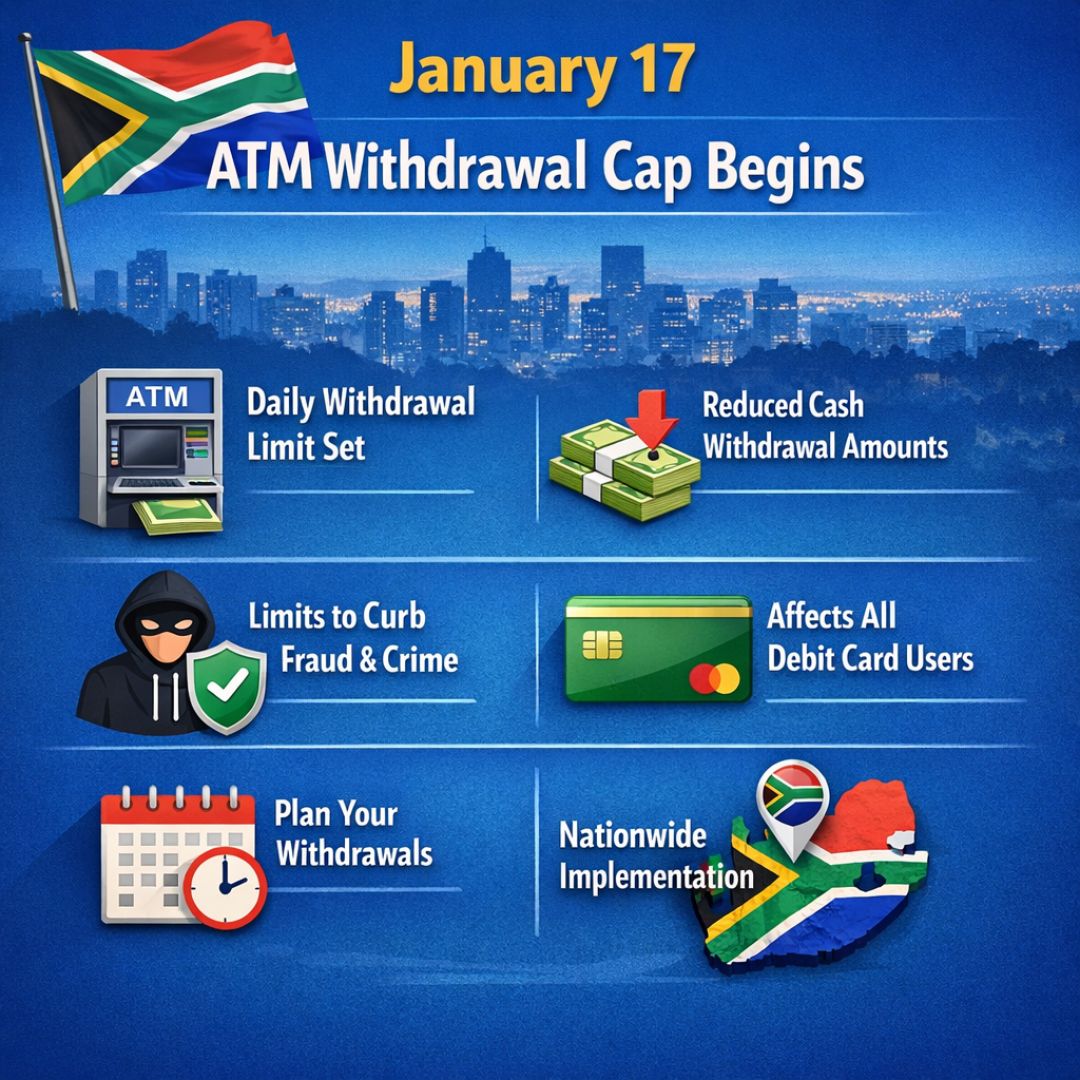
Will the Withdrawal Limits Change in the Future?
Yes. SARB has confirmed that the regulation is part of a three-phase banking reform plan. The current withdrawal limits will be reviewed every six months. Any adjustments will depend on crime and fraud statistics & how well the public adopts digital banking tools and whether financial infrastructure improves in cash-poor areas. As South Africa moves toward stronger digital financial controls the January 17 withdrawal limits represent a significant shift in how citizens manage their money. Staying informed and adapting early will help customers navigate this transition smoothly.