The National Student Financial Aid Scheme (NSFAS) is experiencing significant changes following the South African government’s announcement of new funding rules. This development has created concern among many students because funding reductions are scheduled to begin in January. Students across the country are working to understand how these modifications might influence their academic progress. The new regulations will affect numerous students who rely on NSFAS to cover their university or college expenses. Students from economically disadvantaged communities will experience the greatest impact since they depend on this financial support to pursue their education. The government states that these adjustments will help channel resources toward students with the greatest need. However many observers are questioning whether educational access will remain available to all students under the revised system. The modifications are designed to enhance how NSFAS allocates its resources. Officials want to ensure that funding reaches the appropriate recipients. But the timing of these reductions has generated uncertainty for thousands of young people who are planning their academic paths. Students who currently receive assistance are worried about whether they will continue to meet the more stringent requirements. This restructuring marks a significant moment for student financial aid in South Africa. While the government maintains that the changes are essential to create a more sustainable and equitable system students and education advocates express concern about the immediate effects. The upcoming months will reveal how these new policies influence access to higher education throughout the nation.
Key Updates in NSFAS Eligibility and Funding
– Revised eligibility criteria for applicants

– Priority given to financially vulnerable students

– Potential reduction in the number of funded students
– Focus on fair and sustainable allocation of resources
– Impact on students from rural and underprivileged backgrounds
– New application procedures and deadlines
– Strategies for students to adapt to funding changes

Understanding the Recent NSFAS Funding Changes
The South African government has decided to reduce NSFAS funding for some students in order to review how financial aid operates under current economic constraints and budget limits. Authorities aim to distribute resources more effectively so that the available funds reach as many students as possible. These changes form part of a larger plan to address inefficiencies in the financial aid system and ensure that fund distribution is accountable and transparent. However, these reductions raise concerns about whether students from low-income families can continue to access higher education, potentially making it harder for them to pursue their studies.
| Financial Year | Allocated NSFAS Budget (ZAR) | Total Beneficiaries Supported |
|---|---|---|
| 2021 | R35 Billion | Approximately 500,000 Students |
| 2022 | R40 Billion | Around 550,000 Students |
| 2023 | R42 Billion | Nearly 600,000 Students |
| 2024 (Estimated) | R38 Billion | About 480,000 Students |
| 2025 (Forecast) | R36 Billion | Close to 450,000 Students |
Reasons Behind the NSFAS Funding Reductions
Students need to prepare for the upcoming NSFAS funding cuts by understanding the new rules and application requirements. Staying informed about deadlines and eligibility criteria is crucial to ensure they do not miss funding opportunities. Exploring alternative options, such as scholarships, bursaries, or part-time work, can provide additional financial support. Effective planning and budgeting will help students manage their educational expenses during this period of change.
– Research alternative funding sources
– Stay updated on NSFAS announcements
– Understand the new eligibility criteria
– Plan and budget for educational expenses
– Seek guidance from financial aid advisors
How Students Can Adjust to the Changes
The expected NSFAS funding reductions could have significant effects on South African education. While the government aims to make financial aid more efficient, there are challenges for students from low-income backgrounds. Reduced funding may lead to higher dropout rates and limit access to higher education for students from rural and underprivileged areas. Addressing these issues requires collaboration between educational institutions, government departments, and private organizations to ensure that all students retain their right to education.

| Factor | Current Situation | Impact After Funding Cuts |
|---|---|---|
| Enrollment | High student participation | Admissions may decrease |
| Student Retention | Dropout rates are under control | Increased likelihood of withdrawals |
| Financial Aid Requests | Applications remain steady | Competition for funding will rise |
| Access to Education | Wide availability for students | Opportunities may become limited |
| Student Demographics | Diverse and inclusive population | Potential shifts in demographic mix |
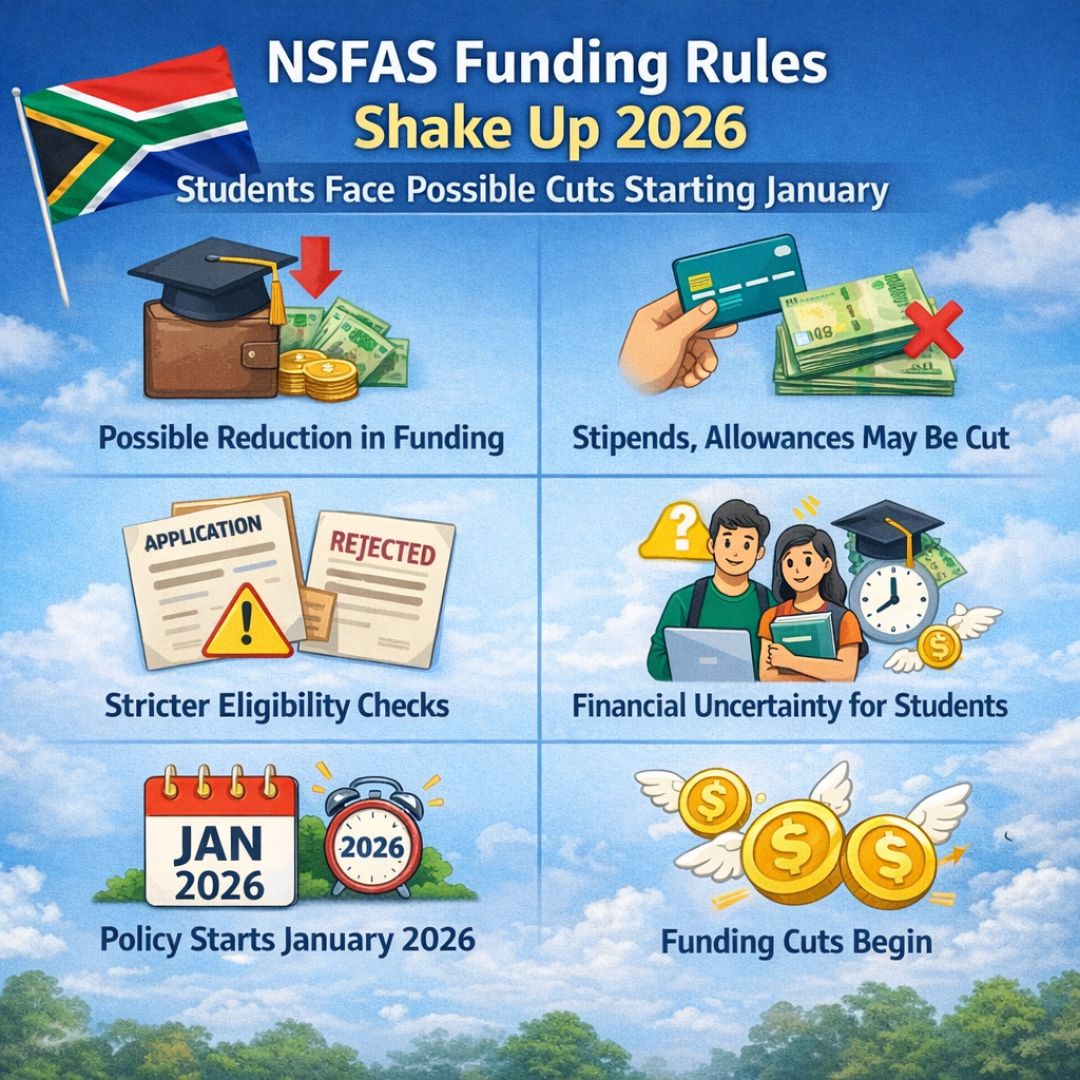
Practical Steps Students Can Take to Manage the Impact
Students who may lose NSFAS funding should actively seek alternative ways to support their education. This includes looking for private scholarships and bursaries offered by universities or companies, taking up part-time jobs, and forming study groups for mutual academic and emotional support. Taking proactive measures can help minimize the negative effects of funding reductions on their studies.
– Apply for available scholarships and bursaries
– Seek part-time employment to supplement income
– Join or establish study groups with classmates
– Utilize campus resources and services
– Participate in student organizations advocating for student needs
Long-Term Implications for South African Higher Education
The education sector will continue to monitor the impact of NSFAS funding cuts on students. Financial challenges are reshaping higher education, requiring innovative solutions to maintain accessibility and fairness. Government officials, universities, and private partners must collaborate to develop sustainable funding strategies that support students over the long term.
– Assess the effectiveness of current funding models
– Encourage private sector participation in education funding
– Promote public-private partnerships for resource allocation
– Invest in educational infrastructure and technology
– Enhance communication between students and financial aid offices
– Monitor and report on the impact of funding changes