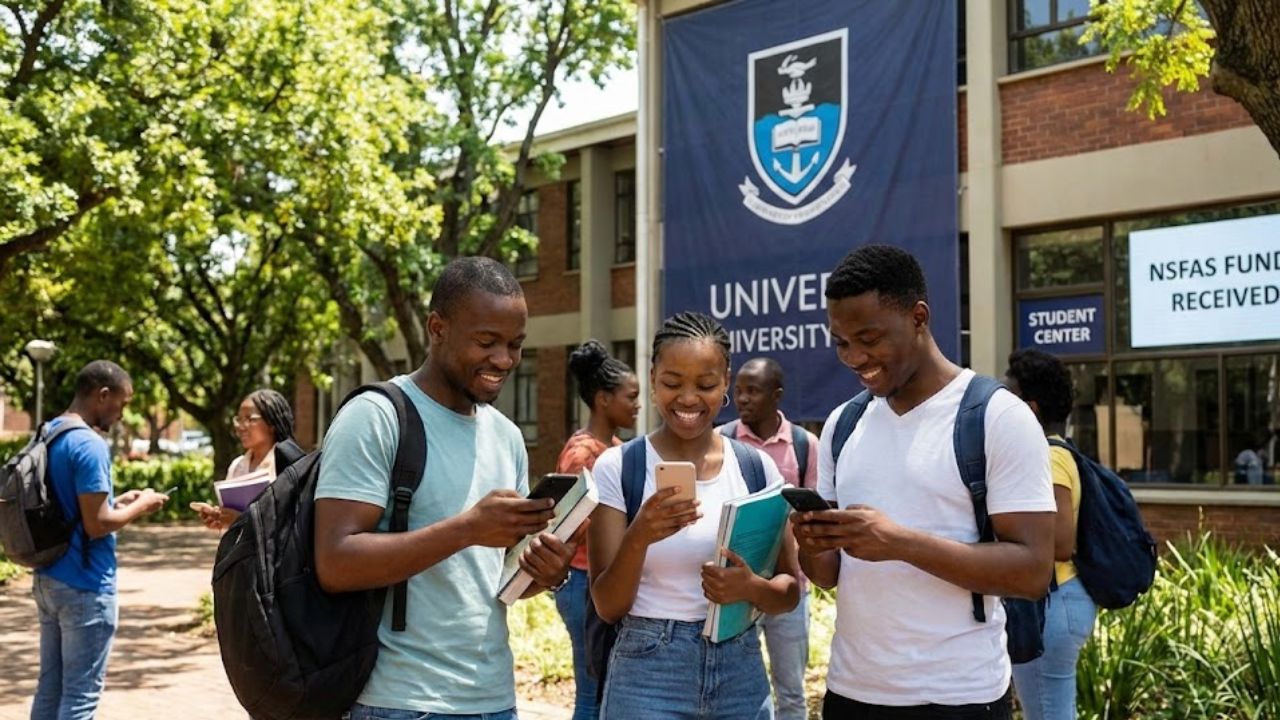
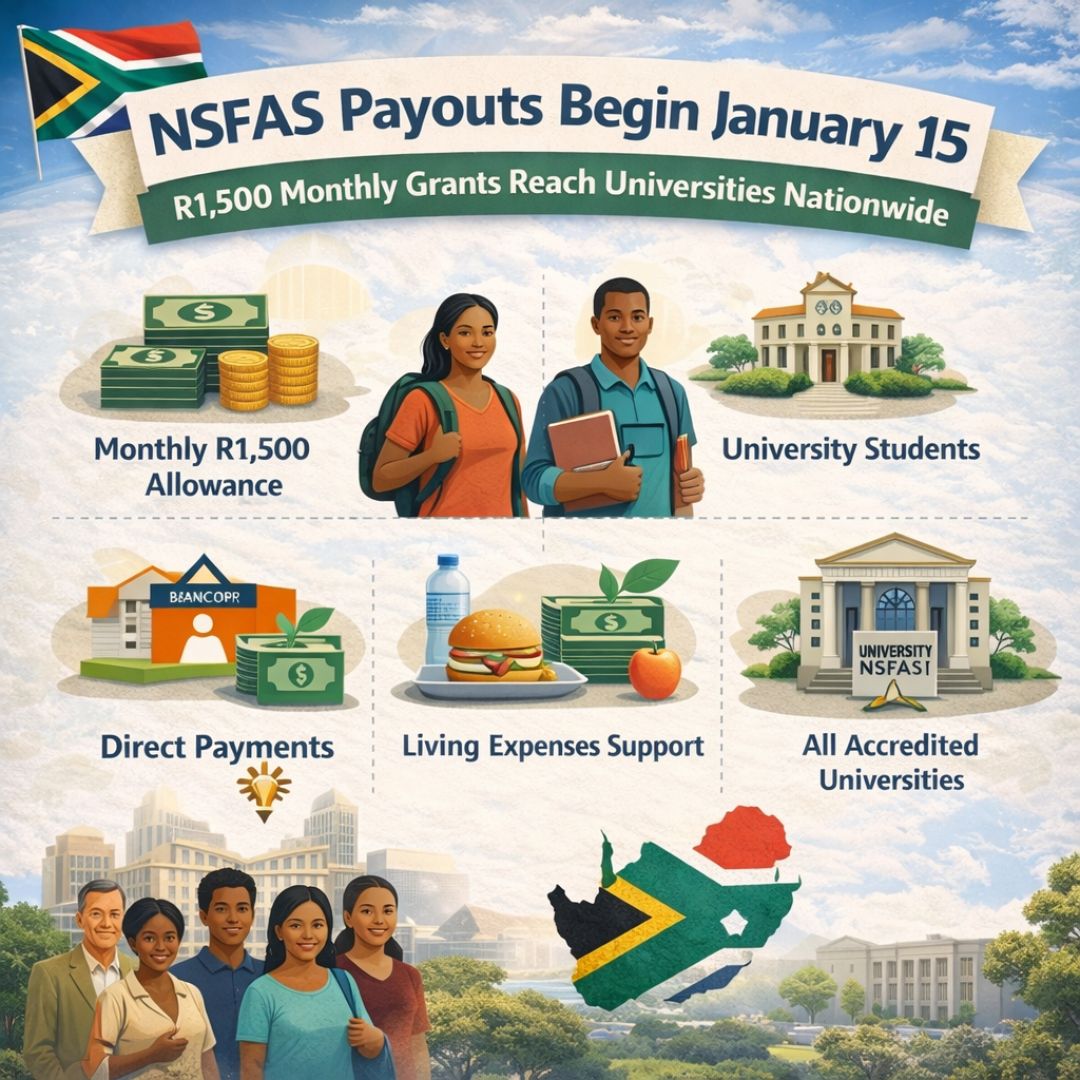
Students at South African universities who receive funding from the National Student Financial Aid Scheme will soon get financial support. Starting from Janaury 15, qualifying students will receive R1500 every month. This program helps students cover their daily living expenses & reduces the financial burden on their families so they can focus better on their studies. This regular financial assistance throughout the academic year can make a real difference for many students by providing them with the resources they need to succeed in their education.

How NSFAS Janaury Payments Support University Students
The National Student Financial Aid Scheme (NSFAS) plays a key role in assisting South African students pursuing higher education. Each month, it provides R1,500 to cover essential living costs, including accommodation, food, and study materials. The program is designed to deliver these funds reliably and on schedule, enabling students to manage their monthly expenses without stress. By offering consistent financial support, NSFAS helps remove barriers that could otherwise prevent students from completing their studies. Payments are transferred directly to students through established banking systems, ensuring efficient and timely access to funds when they are needed most.

Smart Strategies for Managing the R1,500 NSFAS Monthly Grant
Effectively managing the R1,500 monthly NSFAS grant can significantly improve a student’s academic experience. Creating a budget ensures the funds cover all necessary costs. Students should focus on spending wisely to maximize their resources. The first step is to identify essential expenses and allocate funds accordingly, ensuring that key needs like housing, food, and study materials are fully covered.

| Category of Expense | Percentage Allocation | Budget per Month (R) |
|---|---|---|
| Housing | 40% | R 600 |
| Groceries & Food | 30% | R 450 |
| Educational Materials | 20% | R 300 |
| Transportation | 10% | R 150 |
Why NSFAS Funding Is Vital for Higher Education Access
The NSFAS program has transformed higher education access in South Africa. By providing financial assistance to thousands of students, it creates opportunities that many would not otherwise have. This support not only enables individual academic success but also contributes to national development. NSFAS expands access so students from diverse backgrounds can attend universities and colleges. Reliable funding helps students stay enrolled and complete their studies, equipping them with skills for competitive careers and fostering economic growth. Education through NSFAS also promotes social equality, giving students from all economic backgrounds a fair chance to succeed.
Common NSFAS Payment Challenges and How Students Can Overcome Them
While NSFAS provides crucial support, students sometimes face challenges such as payment delays and administrative issues. The organization is actively working on solutions to improve efficiency and communication. Key efforts include:
– Streamlining administrative processes to ensure payments reach students on time.
– Enhancing communication between NSFAS and beneficiaries for better support.
– Incorporating student feedback to improve service delivery.
– Adopting technology to simplify applications and verification procedures.

These initiatives aim to create a smoother experience for students who rely on NSFAS to complete their education, minimizing frustration and delays.
Strengthening NSFAS for Sustainable Student Support
For NSFAS to continue effectively supporting students, long-term sustainability is essential. This requires adequate funding, efficient management, and ongoing program improvements. Key strategies include:
– Government Support: Ensuring consistent funding from the government.
– Partnerships: Collaborating with the private sector to expand resources.
– Monitoring: Conducting regular audits to maintain transparency and accountability.
– Innovation: Implementing new solutions to address evolving educational needs.
By focusing on these areas, NSFAS aims to provide reliable and long-term financial aid, helping students achieve academic success and contribute to national development.