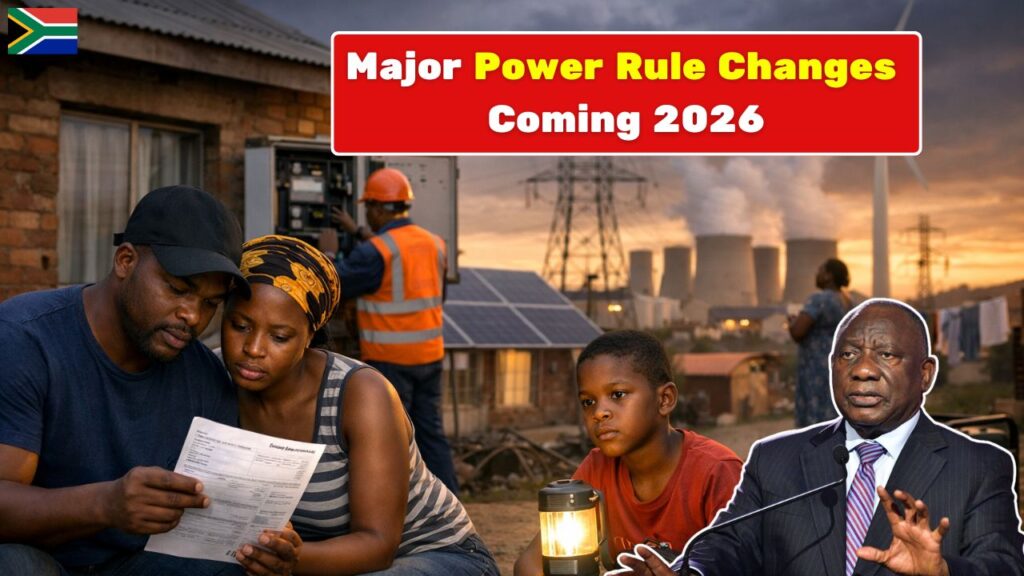
South Africa has struggled to solve its major electricity supply problems. The government planned to introduce new legislation that would take effect from 2026, with changes designed to involve all citizens in the process. These regulations aim to achieve multiple goals particularly making energy use more sustainable for the population.
South Africa’s Shift Toward Renewable and Distributed Energy
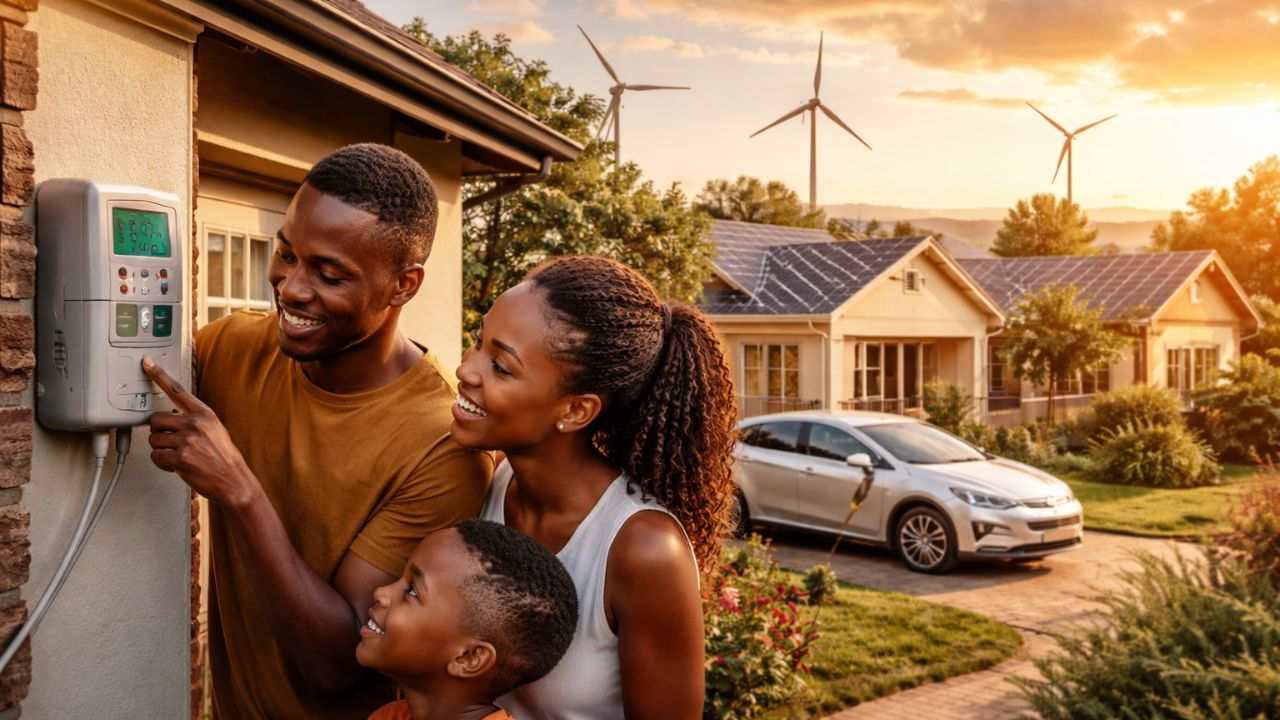
Electricity Law Reforms 2026: A New Era for Home Energy The electricity law reforms coming in 2026 focus heavily on making renewable energy more accessible for individual homes and local communities. The updated legislation will remove many barriers that currently make it difficult and expensive for people to generate their own power. Homeowners will have an easier time setting up solar panels on their roofs or installing small wind turbines and battery systems.

The old rules that made self-generation risky & costly will be eliminated. This means families can produce their own electricity without facing unfair obstacles from utility companies. The new law introduces a clearer system for homeowners to register their energy equipment. People who generate more power than they need can sell the extra electricity back to the grid. They will also be able to join emerging local energy markets where neighbors can trade power with each other.
 SASSA Bonus Grant 2026: Payment dates amount rules and eligibility checks beneficiaries must follow
Updated Grid Access Rules and Electricity Tariff Structures
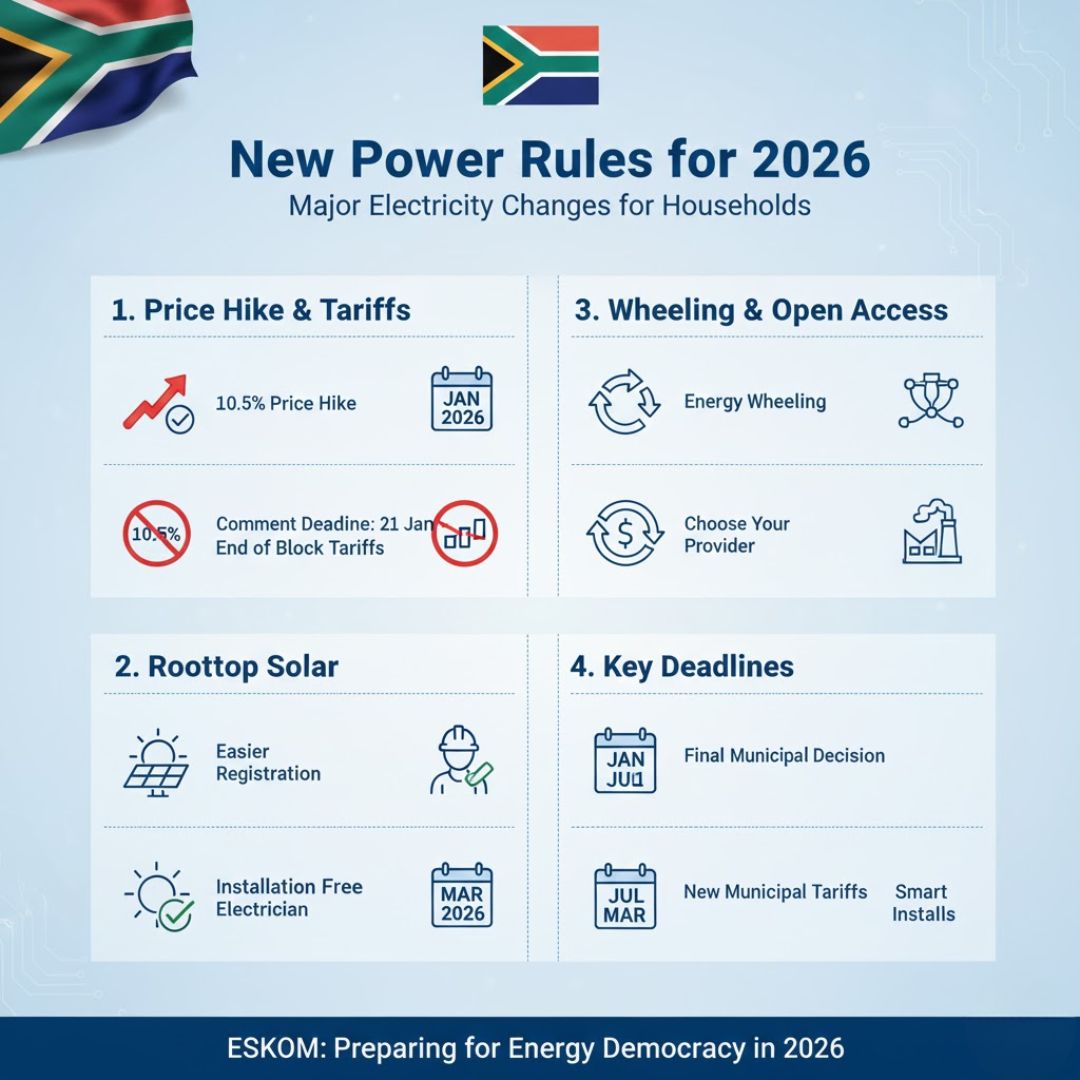
The new electricity laws bring major changes to how consumers access the grid & pay for power. People will need to pay for and use electricity in different ways than before. The reforms introduce tiered tariff options designed to encourage energy-efficient usage and reward those who consume fewer kilowatt-hours.
Customers who use more electricity will automatically pay higher rates in the upper tiers. The idea behind this is to motivate more people to save energy and reduce overall household demand. The current system is expected to improve access for those who need it most by making affordable and sustainable energy easier to obtain for low-income communities during this transition.
Stronger Consumer Rights and Expanded Energy Protections
The new electricity law of 2026 focuses strongly on protecting consumers and ensuring their rights are respected. The goal is to help households understand their electricity supply better and feel more confident about their service. Energy companies now have new duties they must follow. They need to send bills that are easy to understand and clearly show all charges. When prices change companies must explain why this is happening. Customers also get easier ways to solve problems or complaints they might have with their provider.
Government Support for Energy Saving and Home Electrification
The new daily equal utility system aims to cut down on electricity waste. The accompanying regulations provide financial support for energy efficiency improvements and electrification programs.
People who buy energy-efficient appliances may receive benefits such as rebates or reduced rates on their electricity bills. These savings could help slow down the rise in electricity costs while promoting environmentally responsible energy use.
 SASSA SRD payment dates January 2026: What to expect eligibility checks and status tracking steps
One particularly important feature of this initiative is its focus on rural and underserved communities. These areas receive substantial support for electrification projects that bring modern energy services to previously inaccessible locations.
Energy Reform Compliance Requirements and Implementation Timeline
The new electricity bills will be introduced sometime in 2026. The rollout will happen gradually under the watch of government agencies working together with state-owned companies and private businesses. These organizations will provide instructions about what people need to do and when they need to do it.
Homeowners who want to set up renewable energy systems or look into different pricing plans should start learning about these new rules now. This will help them get ready for the changes ahead.
How Households Can Prepare for Upcoming Energy Changes
South African families should start by looking at how much energy they currently use & finding ways to add energy-efficient solutions and renewable options. Anyone thinking about getting solar panels or battery backup systems should reach out to licensed installers to gather information & register their system with the right authorities.
These homeowners can then review the pricing plans and available incentive programs to make smart choices about their energy use and spending. This informed approach helps families transition smoothly into the changing electricity system and take advantage of improvements that suit their situation. The timelines and support provided through energy regulations can help make this adjustment easier and more balanced.
The Bigger Picture of South Africa’s Energy Future
South Africa’s 2026 Electricity Law Reforms The 2026 electricity law reforms represent a significant shift in how South Africa approaches its power sector challenges. These changes aim to stabilize electricity supply and give consumers more control over their energy choices while expanding access to modern power solutions across the country.