
Starting on 7 January 2026 South Africa will launch a stricter grant appeal system that changes how rejected benefit applications are reviewed. For many years applicants relied on informal appeals to reverse decisions quickly but that approach is ending. The new process focuses on detailed reviews and proper documentation with firm deadlines. South African grant recipients including low-income households & benefit claimants need to understand these changes soon. Knowing what officials require now can decide whether an appeal succeeds or fails permanently. The updated system requires applicants to submit appeals within 30 days of receiving a rejection notice. Previously the timeframe was unclear and many people submitted appeals months after their initial rejection.

Stricter Appeal Standards Transform Grant Review Process
South Africa’s revised grant appeal system signals a clear move away from rapid reconsiderations. Appeals are no longer handled as quick follow-ups; instead, review officers now apply a firm evidence-first approach. Each claim must be backed by complete and verifiable documentation. Applicants should prepare for longer review periods, as cases may pass through multiple assessment stages. Officials state that these adjustments are designed to ensure consistent decisions across all provinces, limiting uneven outcomes. While the updated process may feel more demanding, authorities believe it will enhance fairness and reduce repeated or unsupported appeals that previously slowed the system.


Expanded Verification Measures Introduced in Appeals
Another major update centers on how appeal information is checked. Agencies will increasingly rely on cross-department data verification to confirm details such as income, residency, and eligibility. Any inconsistencies may trigger manual case reviews, potentially extending processing timelines. Applicants are encouraged to submit clear, accurate records from the start to avoid unnecessary delays. Although the system is now more rigorous, officials emphasize that these steps help safeguard genuine applicants by ensuring decisions are based on accurate, complete information rather than assumptions.

Impact of the Revised Appeal Process on Applicants
For many applicants, the most noticeable change is the higher level of preparation now required. Appeals that once depended on brief explanations must now meet stronger proof requirements. Missing paperwork can lead to immediate rejection, with limited opportunities to correct errors. On the positive side, clearer standards lead to more predictable outcomes, allowing applicants to better assess their chances. Understanding these requirements early helps South Africans decide whether pursuing an appeal is worthwhile before committing significant time and effort.

Overall Implications of the Tougher Appeal Framework
The updated framework reflects a shift toward accountability over convenience. While concerns remain about reduced accessibility, the government stresses the importance of fair and transparent decision-making rather than speed alone. Well-prepared applicants can still benefit from a clear review process, even if outcomes take longer. Over time, officials expect fewer instances of system misuse, enabling resources to focus on legitimate appeals and strengthening trust in South Africa’s grant programs.

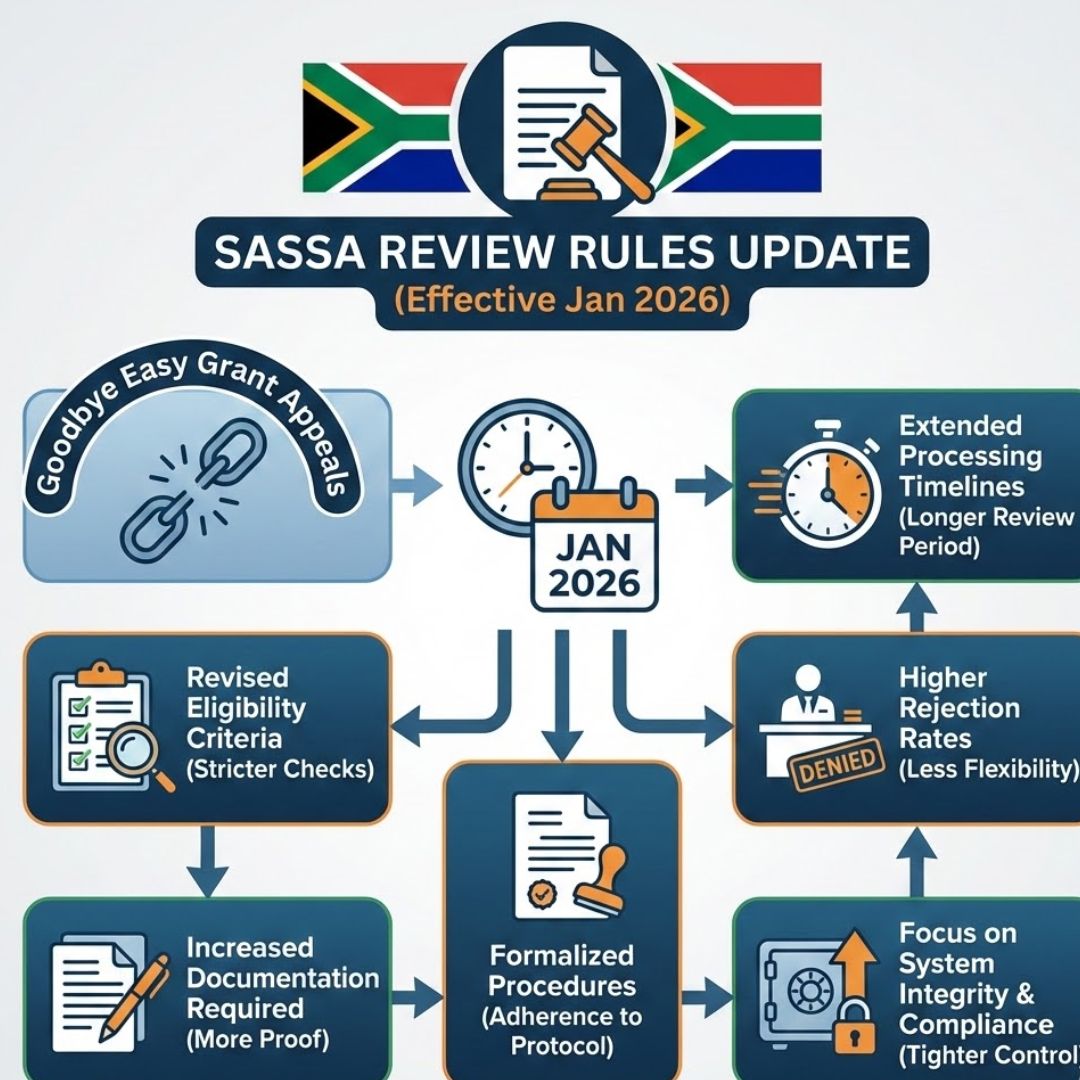
| Aspect | Earlier Appeal Method | Revised Appeal Procedure |
|---|---|---|
| Supporting Evidence | A basic written explanation was usually sufficient | Detailed, complete, and properly backed documentation is now required |
| Review Duration | Fast and informal evaluation process | Extended review with multiple structured assessment stages |
| Verification Process | Limited information checks | Information verified through multiple departments and agencies |
| Chances of Refusal | Lower risk if basic information was provided | High risk if documents are incomplete, missing, or unclear |
