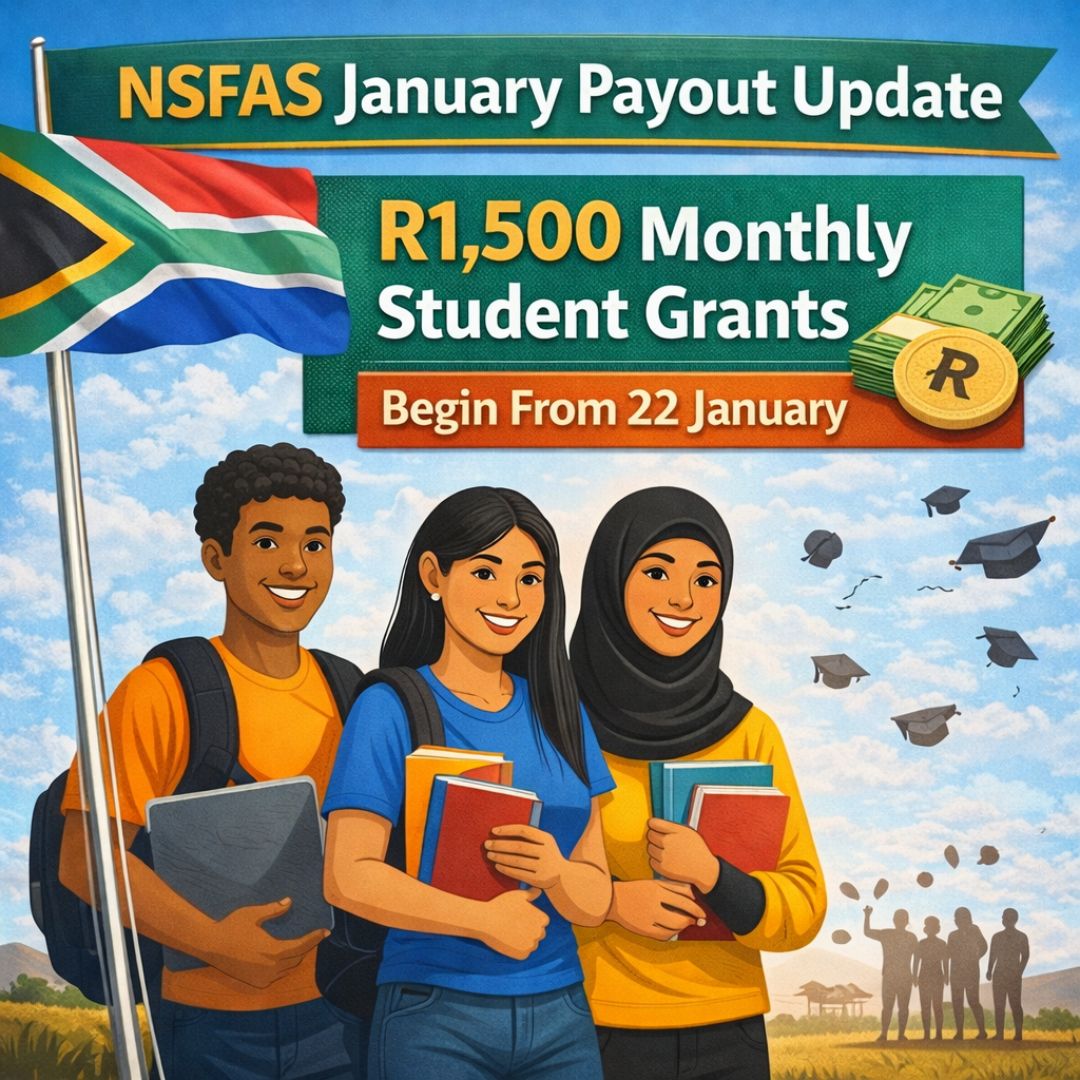
The January NSFAS payout update brings welcome relief to thousands of students across South Africa who rely on monthly support to continue their studies. From 22 January, qualifying beneficiaries will begin receiving the R1,500 monthly student grant aimed at covering essential academic and living costs. This update is especially important at the start of the academic year, when expenses such as accommodation, transport, and learning materials quickly add up. Understanding how the January payments work can help students plan better and avoid unnecessary stress during the semester.

NSFAS January payout start date explained
The NSFAS January payout is scheduled to begin on 22 January, ensuring students receive financial support early in the academic cycle. Payments will be processed directly to approved beneficiaries using registered bank accounts or NSFAS-linked payment solutions. This early release is meant to assist with immediate needs like registration fees and daily expenses. Students are encouraged to verify their banking details to avoid delays and ensure smooth payment flow. NSFAS has also reminded beneficiaries to regularly check official updates to stay informed about release date clarity, approved funding status, and payment system checks as funds are rolled out nationwide.


R1,500 monthly student grant coverage
The R1,500 monthly student grant is designed to support day-to-day living costs while studying at public universities and TVET colleges. This allowance typically contributes toward meals, transport, and personal necessities during the academic term. While it may not cover every expense, it offers consistent relief for eligible students. Beneficiaries should budget carefully to make the most of this support and maintain monthly spending balance. NSFAS advises students to use funds responsibly, prioritising essential study needs, academic continuity support, and basic living costs throughout the month.
 SASSA Bonus Grant 2026: Payment dates amount rules and eligibility checks beneficiaries must follow
NSFAS payment process for January 2026
The January NSFAS payment process follows a structured verification system to ensure funds reach the right students. Once registration data is confirmed by institutions, payments are queued for disbursement. Any mismatch in personal or banking information can lead to delays, so students must act promptly if issues arise. Keeping documents updated helps maintain accurate beneficiary records. NSFAS also recommends monitoring communication channels for payment confirmation alerts, institution data approval, and disbursement tracking updates to avoid confusion during the payout period.
What the January NSFAS update means for students
This January NSFAS update signals a more predictable start to student funding in South Africa, giving beneficiaries confidence as the academic year begins. Early payments allow students to settle in without borrowing or falling behind on essentials. While challenges can still occur, proactive communication and proper planning reduce uncertainty. Students who stay informed are better positioned to manage their finances and focus on academics. Overall, the update reinforces financial stability focus, student support continuity, early semester relief, and education access assurance for thousands of learners.
| Category | Details |
|---|---|
| Monthly Allowance | R1,500 per student |
| Payment Start Date | 22 January |
| Eligible Institutions | Universities and TVET Colleges |
| Payment Method | Bank account or NSFAS system |
| Purpose | Living and study expenses |
Frequently Asked Questions (FAQs)
1. When will the January NSFAS payments start?
Payments are expected to begin from 22 January.
 SASSA SRD payment dates January 2026: What to expect eligibility checks and status tracking steps
2. How much is the monthly NSFAS student grant?
Eligible students will receive R1,500 per month.
3. Who qualifies for the January NSFAS payout?
Registered and approved NSFAS beneficiaries at public institutions qualify.
4. What should I do if my payment is delayed?
Check your details and contact NSFAS or your institution immediately.