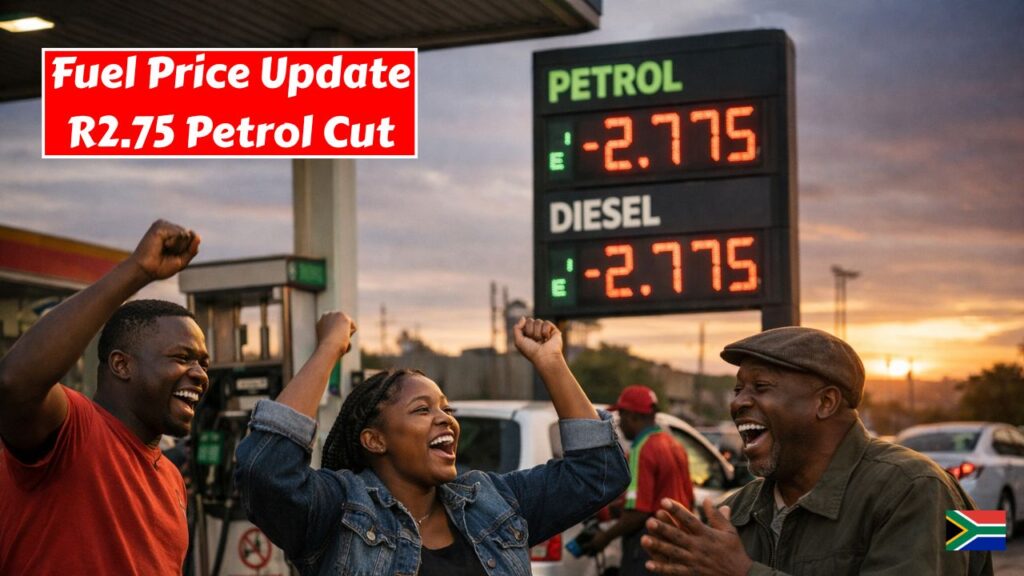
South Africa has revealed a significant fuel price reduction that takes effect on January 15 2026. Petrol will cost R2.75 less per litre and this brings much-needed relief to motorists who have faced rising fuel expenses for an extended period. The move comes after ongoing public demands and steady global oil markets combined with an improved local currency that together made conditions favorable for this adjustment. The price drop applies to both petrol & diesel nationwide. Drivers will see lower costs at fuel stations from the start of the new year. This marks one of the biggest single price cuts in recent times and will influence both family finances and company expenses. Officials reached this conclusion after examining various economic considerations.
Immediate Fuel Price Relief for South African Motorists
From the end of January, drivers across South Africa will experience instant relief at fuel stations following an official government decision. Petrol prices will decrease by R2.75 per litre, directly reducing everyday commuting costs for private vehicle owners. Transport operators are also expected to benefit, as lower fuel expenses can ease operational pressure and support better cost management across the industry.


January Fuel Price Adjustment Explained
The latest fuel price update for January introduces a notable reduction that impacts both individual motorists and commercial transport services. This change arrives at a critical time, offering short-term financial breathing room as the year begins.

Main Reasons Behind the Petrol Price Reduction
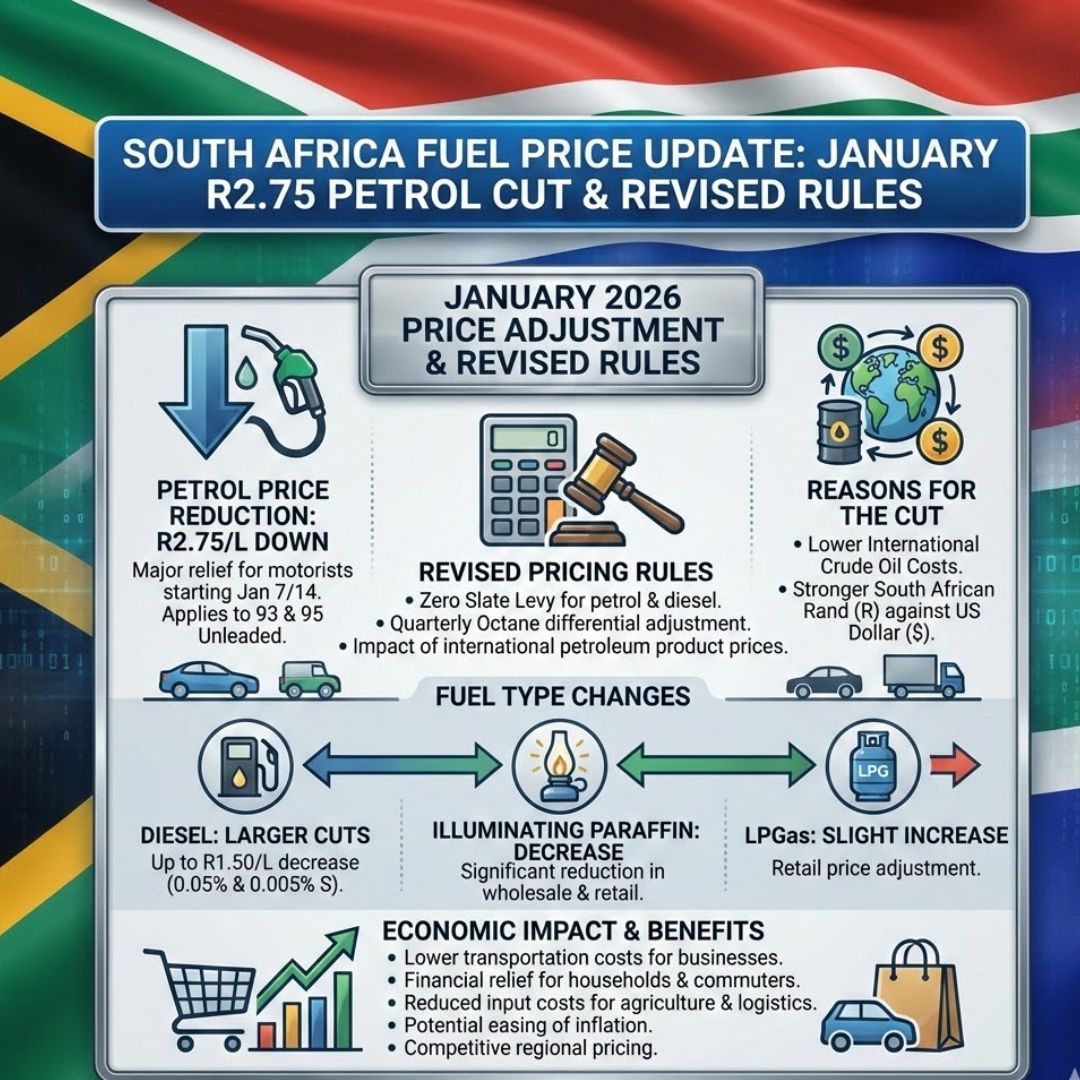
The drop in fuel prices is driven by a mix of international market developments and domestic economic factors. Global oil prices have stabilised due to improved supply conditions and more balanced demand levels. At the same time, a stronger South African rand against the US dollar has reduced fuel import costs. In addition, the National Treasury approved a temporary reduction in certain fuel levies, further supporting the price decrease.
How Cheaper Fuel Supports Household Budgets
Lower petrol prices are expected to provide direct financial relief to households. With reduced spending on transportation, families may find it easier to manage essential living costs. This benefit is especially significant for middle-income households and residents of rural areas, where long-distance travel for work, education, and daily needs is often unavoidable.
Relief for Daily Commuters and Public Transport Users
The fuel price cut may also bring positive effects for those who rely on public transport. Taxi and bus operators could find it easier to delay or avoid fare increases, helping maintain affordability for passengers. For regular commuters, reduced fuel-related expenses can help ease financial pressure and improve the overall cost of daily travel.

Expected Effects on Goods and Service Pricing
Cheaper fuel is likely to lower transport and logistics costs across multiple supply chains. Over time, this could contribute to more stable or slightly reduced prices for goods and services. Key sectors such as manufacturing and agriculture may benefit, helping to limit broader inflationary pressure within the economy.
Support for Rural Areas and Small Businesses
People living in rural communities who depend on fuel for generators and heating are expected to notice meaningful savings. Small enterprises that rely heavily on transportation can use the reduced costs to strengthen profit margins or reinvest in daily operations. This period offers valuable short-term relief for businesses with high fuel dependence.
What the Latest Fuel Cut Indicates Going Forward
This reduction signals a temporary pause in recent fuel price increases. While the relief may not be permanent, it delivers immediate support to consumers and businesses alike. As the new prices take effect at the start of the year, South Africans can plan travel and manage expenses with greater certainty and confidence.