
If you have ever stood in a long Home Affairs queue and worried about getting helped before they close, you need to know about the new Smart ID changes coming soon. South Africa is introducing a redesigned Smart ID system in 2026 that will process applications faster and offer stronger security. The new system takes a digital-first approach designed to reduce frustration for millions of citizens. The government plans to modernize how South Africans obtain their identity documents, making the process more efficient and reliable.

Overview of South Africa’s New Smart ID Process for 2026
| Category | Updated Changes |
|---|---|
| Application Process | Primarily digital submissions with scheduled in-person appointments |
| Security Measures | Enhanced biometric authentication for stronger identity protection |
| Processing Timeline | Accelerated approvals driven by automated systems |
| Green ID Book | Progressive withdrawal with limited acceptance at services |
| Verification Checks | Tighter document screening and validation requirements |
| Rural Outreach | More mobile Home Affairs units deployed to remote areas |
| Implementation Deadline | Heightened urgency as full rollout approaches in 2026 |

South Africa Introduces a Modern Smart ID System
The updated Smart ID process marks a major shift in how identity management works in South Africa. Government authorities are replacing outdated manual systems with digital platforms that reduce paperwork and improve accuracy. The goal is to create a reliable identity system that supports daily life, from banking and employment to travel and access to public services.

Why the 2026 Smart ID Update Matters to Everyone
Understanding the New Smart ID Rules An identity document today does more than just confirm who you are. It controls your access to financial services, jobs, healthcare, education, and social benefits. When identity systems fail, people face delays, lost income, and emotional stress. The new Smart ID rules aim to eliminate long-standing problems like fraud, processing backlogs, and inconsistent records. These updated regulations introduce modern technology to make identity verification faster and more reliable.

Digital-First Applications Become the New Standard
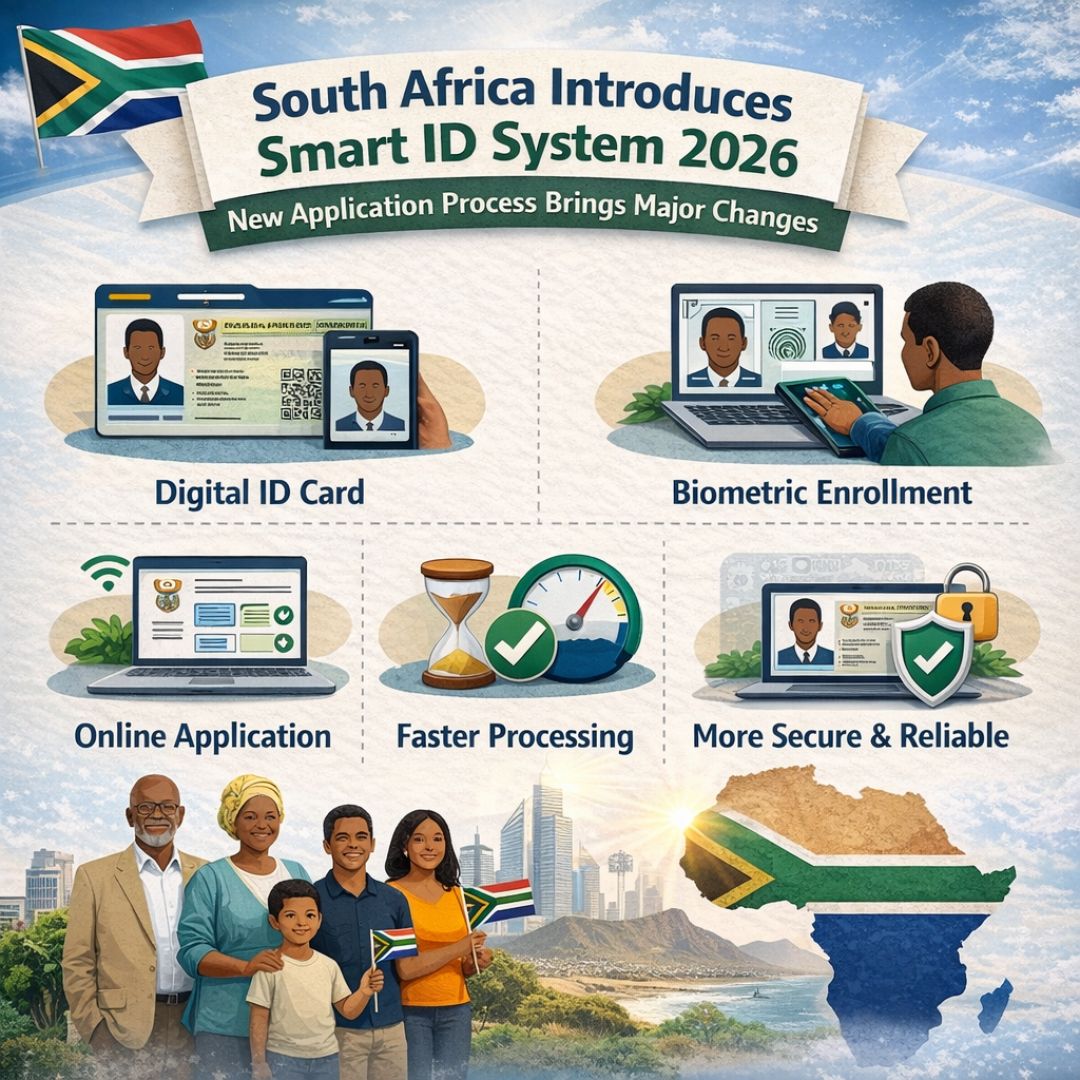
Smart ID Applications Move Online from 2026 Starting in 2026, the process for applying for a Smart ID card will happen almost completely online. Citizens will need to fill out their applications on the internet and upload all necessary documents before visiting a Home Affairs office. They will also book appointments online ahead of time. Walk-in services at Home Affairs offices will be very limited under this new system. Without completing the online steps first, getting service at an office will be difficult or impossible. The new system includes a tracking feature that lets applicants check their application status at any time.
Stronger Biometric Security for Better Protection
Enhanced Security Features in the New Smart ID System The new Smart ID system brings better fingerprint scanning and improved facial recognition technology. These upgrades make sure that every identity record connects correctly to the right person. This makes it much harder for criminals to steal identities. The process might seem more thorough than before, but these additional steps exist to protect people from fraud and prevent misuse of personal information. The system creates a stronger link between your physical identity and your official records.

Faster Processing Times and Reduced Backlogs
Long waiting periods have been one of the biggest complaints about ID applications. The upgraded system uses automated verification tools that replace slow manual checks. Most applications are now processed much faster than before. The reduced pressure on staff has improved service quality across Home Affairs offices.
Stricter Document Verification Rules
Document Verification Under the New System The new system requires authorities to conduct more thorough examinations of supporting documents. All birth records, name changes, and household information must be consistent across every document submitted. Applications may experience delays even when minor discrepancies appear. Citizens should carefully review their paperwork before submission. Check for spelling errors, outdated information,
 January 17 ATM Withdrawal Cap Begins: New Banking Rule Impacts Debit Card Users Nationwide
