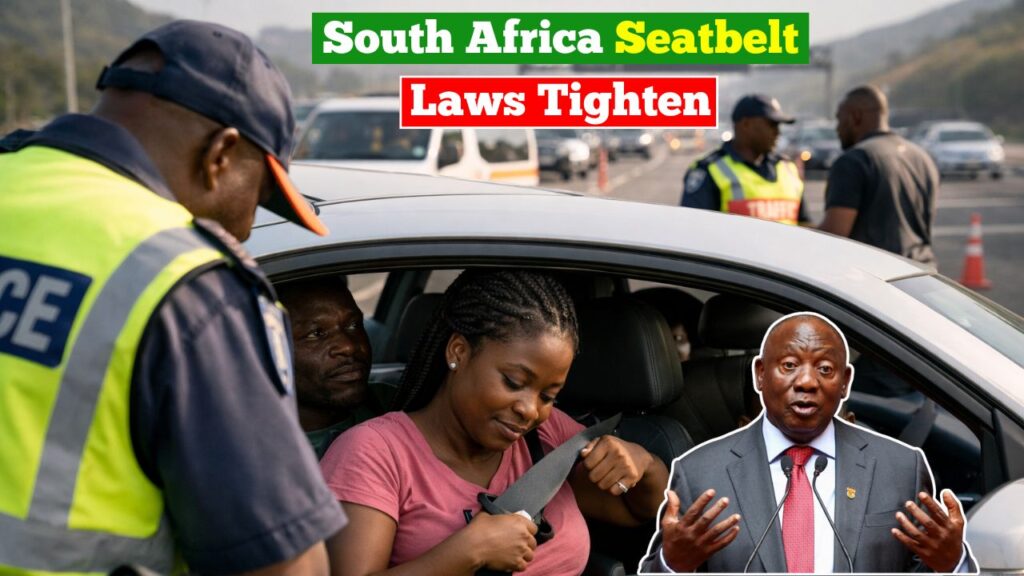
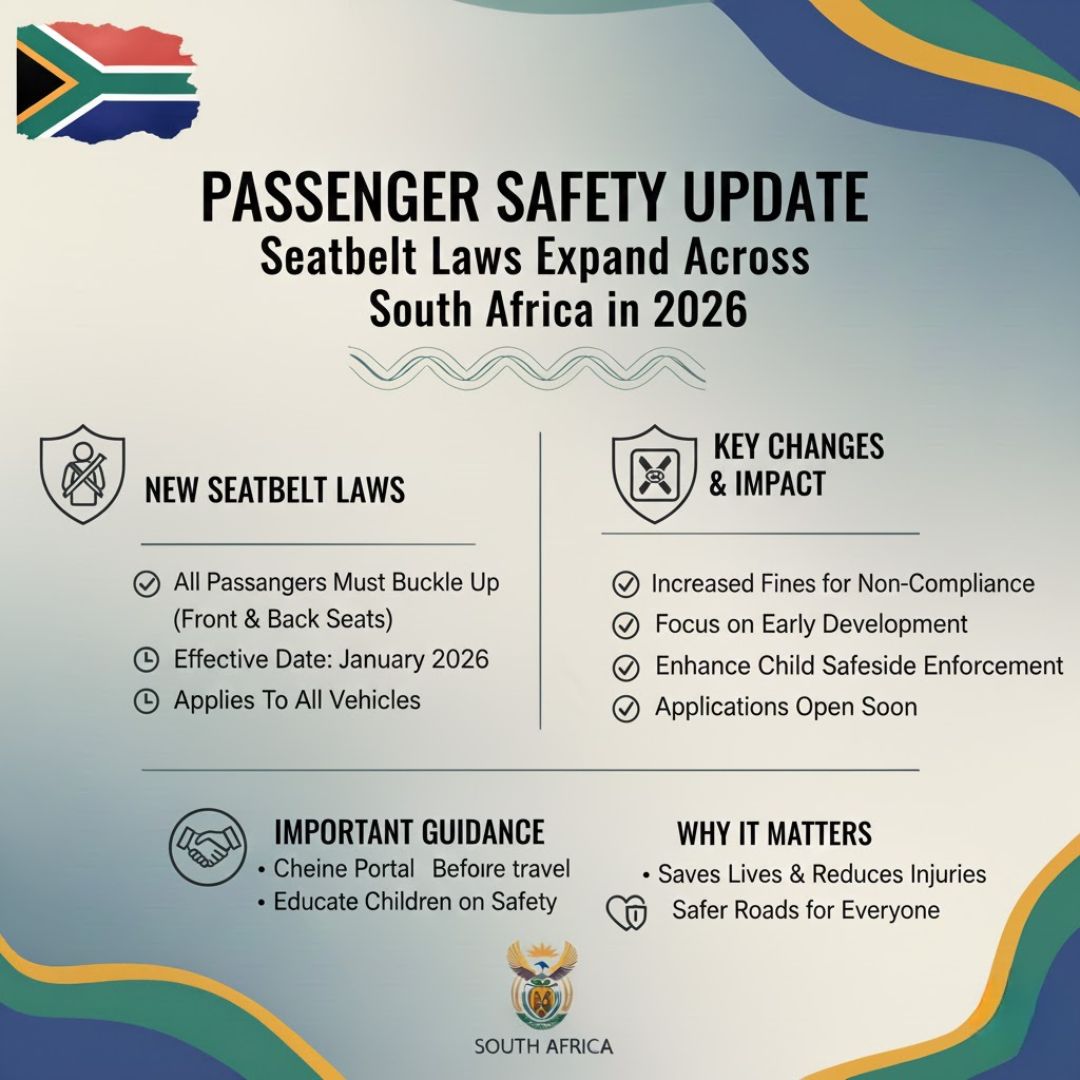
A new seatbelt enforcement regulation takes effect from 15 January 2026, introducing stricter compliance measures and a fixed R500 fine for every violation. This change forms part of broader road safety reforms aimed at reducing serious injuries and road fatalities while promoting long-term traffic safety. The rule applies uniformly across all nine provinces, with no exemptions based on seating position or travel distance, making it one of the most comprehensive seatbelt laws governing road use.
Clarifying the New Seatbelt Requirements
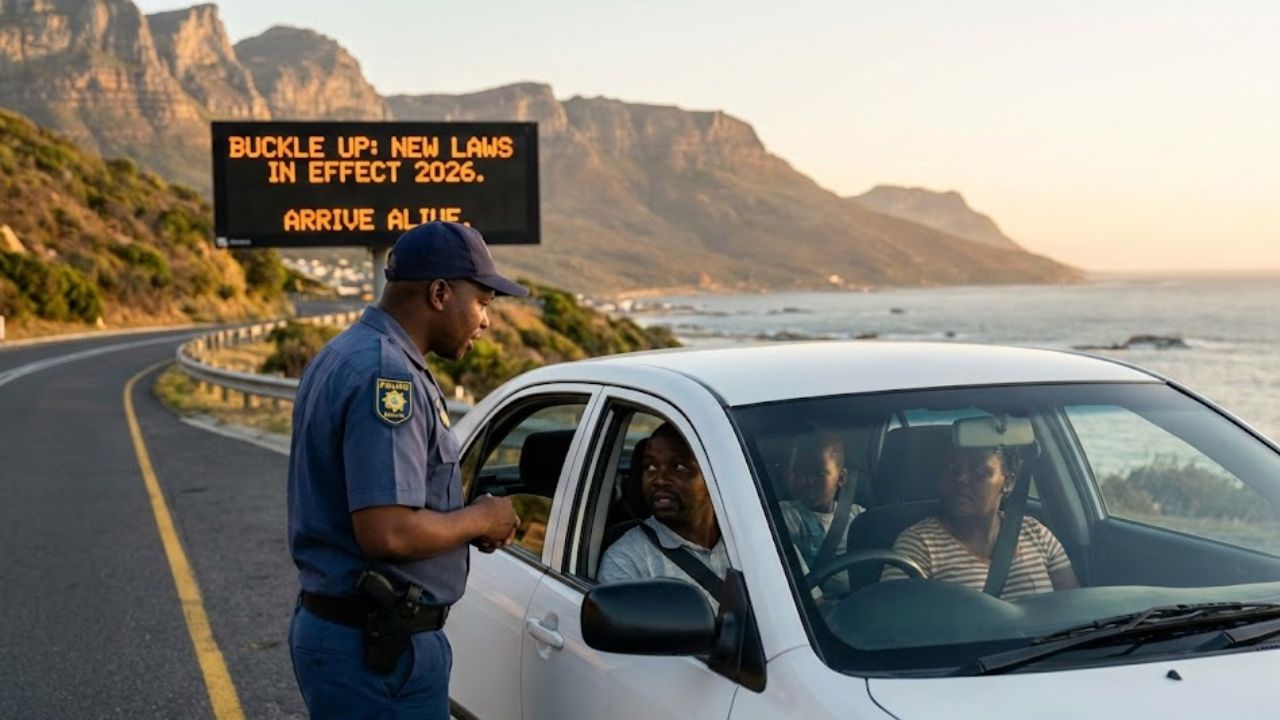
Under the updated law, every vehicle occupant must wear a seatbelt, regardless of where they are seated. This removes earlier gaps that limited enforcement for rear-seat passengers. From January 2026 onward, law enforcement officers are authorised to issue immediate fines whenever they identify a moving vehicle with passengers who are not properly restrained.

 SASSA Bonus Grant 2026: Payment dates amount rules and eligibility checks beneficiaries must follow
How the R500 Fine Works and How It Will Be Enforced
The regulation imposes a R500 penalty per unrestrained person inside a vehicle. This means a driver may face multiple fines if more than one passenger fails to comply. Enforcement will be carried out through targeted patrols in high-risk urban areas and on highways, supported by camera-based vehicle monitoring technology to ensure consistent compliance.
- Driver without seatbelt: R500 fine from January 2026
- Front passenger without seatbelt: R500 fine from January 2026
- Rear passenger without seatbelt: R500 fine from January 2026
Reason Behind the Regulation
Authorities have indicated that a large proportion of road fatalities involve individuals who were not wearing seatbelts. By introducing firm penalties, the department aims to reinforce safer driving habits and reduce preventable deaths. The regulation is positioned as a decisive step toward strengthening national road safety and encouraging responsible behaviour among motorists.
 SASSA SRD payment dates January 2026: What to expect eligibility checks and status tracking steps
Public Reaction and Expected Road Safety Outcomes
Public response has been mixed, with some motorists viewing the R500 fine as excessive, while road safety organisations have strongly welcomed the measure. According to experts, the regulation is expected to drive lasting behavioural change, similar to the impact previously achieved through stricter enforcement of drunk-driving laws and speed limit controls.
What Motorists Should Do Before January 2026
Drivers are encouraged to check that all seatbelts in their vehicles are fully functional and to make seatbelt use a non-negotiable part of everyday driving. Passengers, particularly children and elderly family members, should be informed about the new enforcement rules to avoid penalties and improve overall safety.
Conclusion
The January 2026 seatbelt regulation represents a major step in South Africa’s road safety approach. With a R500 fine for every offence, the message is clear that seatbelt compliance is mandatory for everyone. Motorists who adapt early will not only avoid financial penalties but also contribute to safer roads for all users.