The Administrative Adjudication of Road Traffic Offences system known as AARTO will eliminate the current penalty-point registers & public notices about offending businesses when it introduces its demerit points framework. The new system aims to operate more efficiently through automation while covering a broader range of cases. This change has sparked important legal discussions about whether accumulating a certain number of demerit points should result in criminal charges rather than administrative penalties. Additional conversations focus on identifying which aspects of the legislation need to be modified.

Nationwide Rollout of the AARTO Demerit Points System Begins in 2026
One of the most significant changes South African motorists will encounter in 2026 is the national implementation of the AARTO demerit points system. This long-anticipated measure, rooted in the Principle of Accountability, is designed to systematically track repeated traffic offences. After several postponements since its initial proposal, the rollout is now scheduled for 1 July 2026, shifting from an earlier late-2025 timeline. The extended preparation period allows municipalities additional time to align their systems and enforcement processes, ensuring consistent readiness across the country.

How the AARTO Demerit Points Framework Operates
Under the AARTO Act, every traffic offence will carry both a monetary fine and a corresponding number of demerit points. Offences are categorised by severity, with more serious violations attracting higher point allocations. Drivers will begin each cycle with zero demerit points and accumulate points for offences such as speeding, traffic signal violations, and other forms of unsafe driving behaviour. Accumulating points beyond the permitted threshold may result in the suspension or eventual cancellation of a driving licence, reinforcing accountability for habitual offenders.
 SASSA Bonus Grant 2026: Payment dates amount rules and eligibility checks beneficiaries must follow
Shifting from Criminal Penalties to Administrative Enforcement
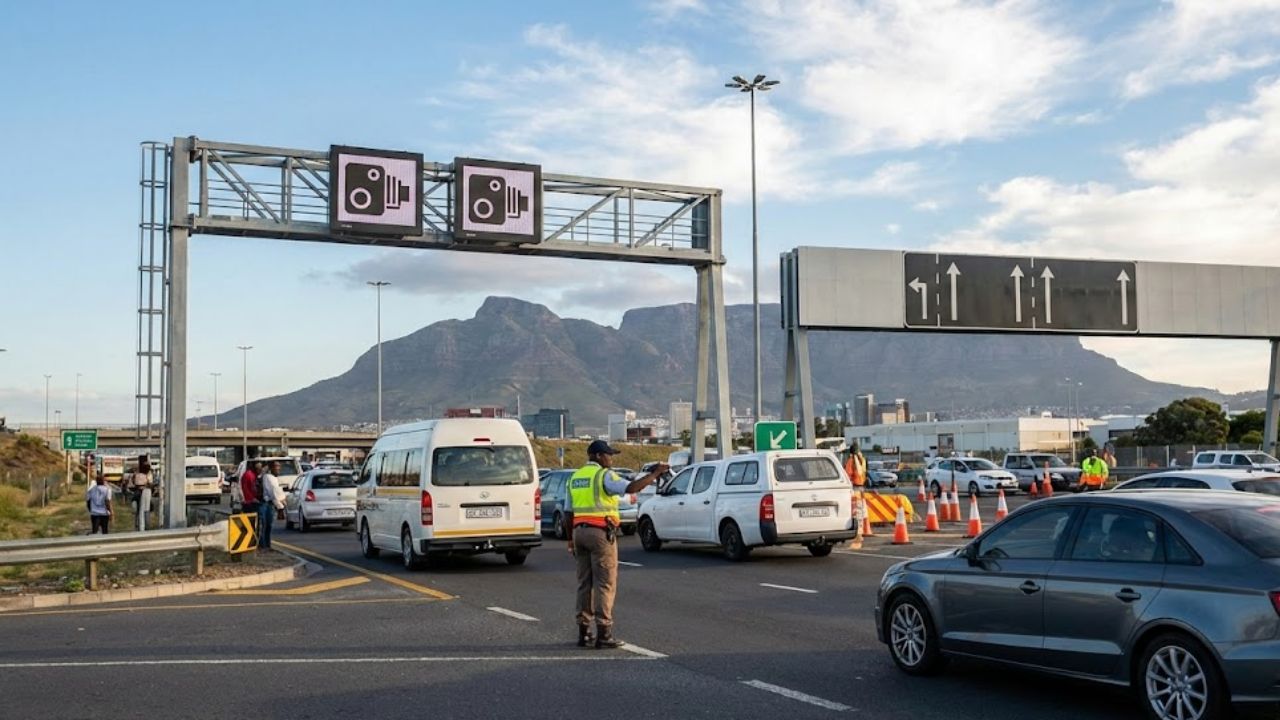
The introduction of the demerit points system represents a clear move away from purely criminal penalties toward a more structured administrative enforcement model. This approach focuses on influencing long-term driver behaviour rather than isolated punishment. By standardising how offences are penalised nationwide, the system aims to simplify enforcement procedures while ensuring uniform application of fines and sanctions across all provinces. Ultimately, the mechanism is intended to support safer road use and reduce repeat violations.
Stronger Licensing, Training, and Compliance Standards
Complementing the AARTO reforms, the National Road Traffic Amendment Act has been approved, introducing tighter controls over driving licence testing centres and driver training institutions. The updated legislation establishes stricter accountability measures for examiners, whose licences may be suspended or amended if they fail to comply with prescribed legal standards. These changes are designed to ensure that learner drivers are assessed under consistent, transparent, and integrity-driven conditions.
Raising the Bar for Driver Competency and Integrity
The revised licensing framework seeks to ensure that all newly registered drivers meet higher competency benchmarks. By tightening oversight of testing processes and examiner conduct, the system aims to reduce irregularities and strengthen public confidence in the licensing process. Collectively, these measures contribute to broader efforts to enhance overall road safety by ensuring that only suitably qualified drivers are granted licences.
Increased Enforcement and Higher Penalties for Common Offences
South Africa’s evolving road traffic laws continue to place emphasis on everyday compliance. Following earlier measures introduced in late 2025, such as mandatory seatbelt usage, motorists can expect stricter enforcement and higher penalties for routine violations. First-time offences, including failure to wear a seatbelt, may attract substantial fines, with authorities maintaining consistent enforcement as part of a broader road safety strategy. Adhering to these regulations remains essential to avoid significant financial penalties and potential licence consequences.
 SASSA SRD payment dates January 2026: What to expect eligibility checks and status tracking steps
New Rules for E-Hailing and Professional Drivers
The 2026 traffic law updates also extend to the rapidly expanding e-hailing and commercial transport sector. Amendments to the National Land Transport Act formally recognise e-hailing services as part of the public transport system. Drivers operating within this sector will be required to obtain valid operating licences and comply with defined professional driver standards.
Enhanced Safety and Compliance Requirements
Vehicles used for e-hailing services must meet additional compliance criteria, while drivers will be subject to background checks and mandatory safety measures, including the installation of panic buttons. These requirements aim to improve passenger safety, service reliability, and regulatory oversight within the ride-hailing industry, aligning it with broader national transport policy reforms.
Preparing for 2026: What Motorists Should Know
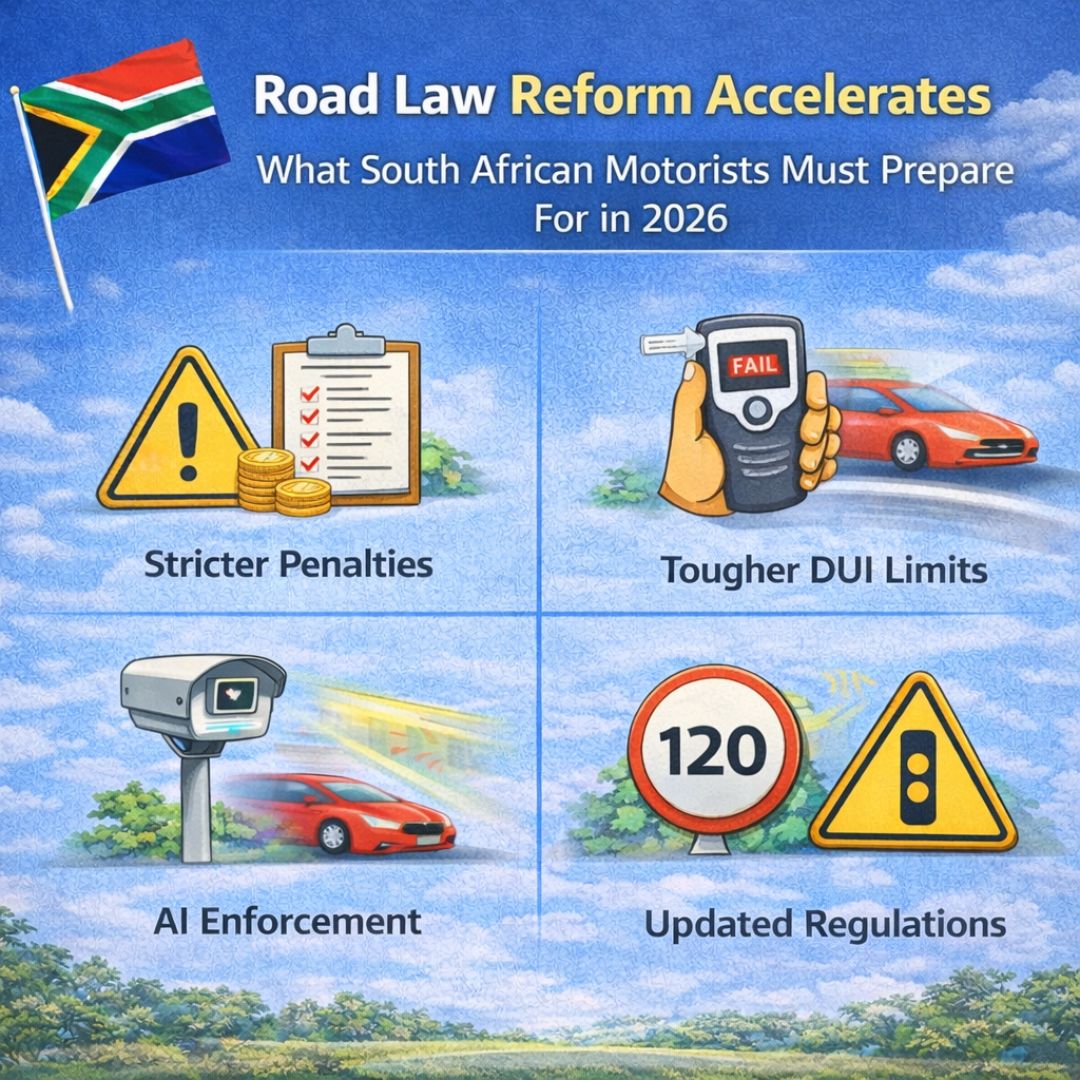
As these reforms take effect, South African drivers are encouraged to remain informed and proactive. Understanding how the demerit points system functions, recognising how points impact driving privileges, and complying with updated safety standards will be critical in avoiding penalties. Regularly consulting official transport and Department of Transport resources can help motorists stay updated and navigate the changing legal landscape with greater confidence.
Broader Impact of the 2026 Traffic Law Reforms
The comprehensive traffic regulation changes scheduled for 2026 mark a significant step in the government’s ongoing effort to reduce road accidents and establish a consistent national enforcement framework. With tighter administrative penalties, strengthened training and licensing controls, and new standards for professional and e-hailing drivers, the reforms aim to discourage reckless behaviour and promote responsible road use. Their long-term impact will depend on effective implementation and visible outcomes across South Africa’s road network.