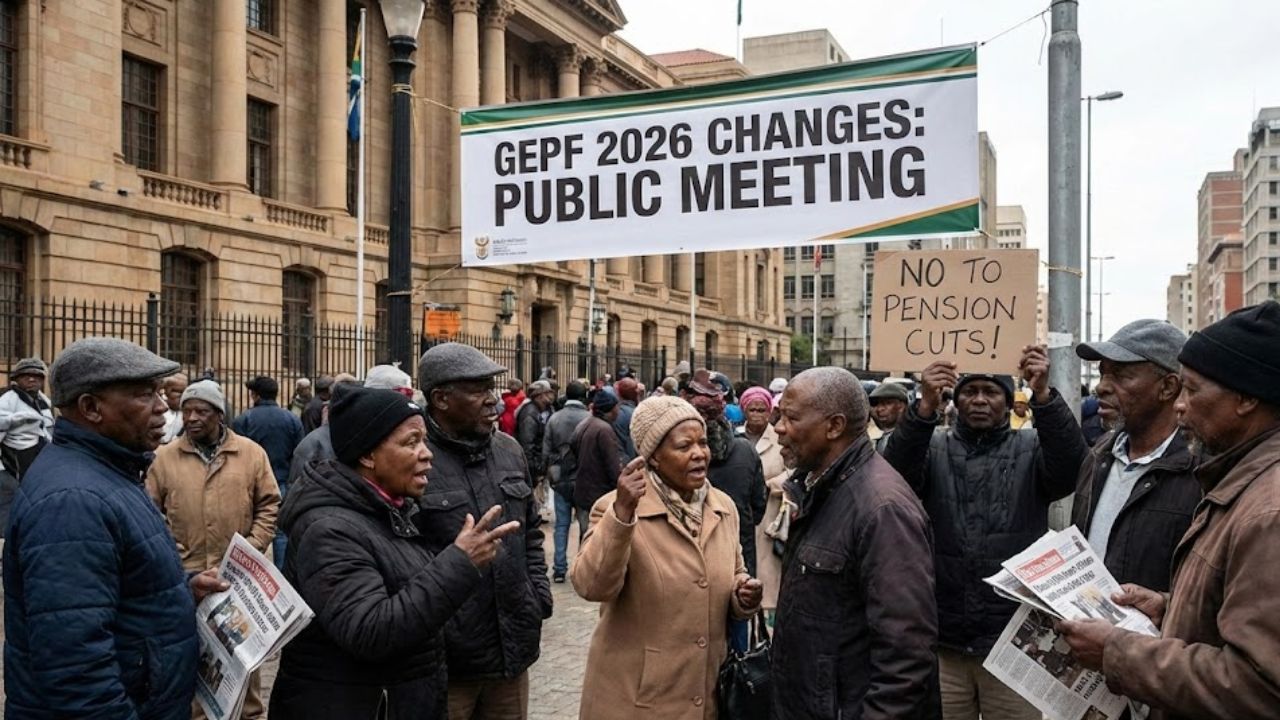
The Government Employees Pension Fund (GEPF) has announced that the retirement age will officially increase to 67 starting in 2026. This decision has sparked widespread anger across South Africa. Workers & unions along with various civil society organizations have strongly opposed this change because they believe it unfairly places additional financial burdens on employees. Many people are frustrated that they will now have to work longer before they can retire. The announcement has created tension between the government and public sector workers who feel the policy does not consider their needs. Critics argue that raising the retirement age ignores the physical demands many workers face in their jobs and the difficulty of finding employment for older citizens.

Revised Retirement Age Under the GEPF Rules
Under the updated provisions of the Government Employees Pension Fund (GEPF), members are now required to retire at 67 instead of 65. Access to full retirement benefits is conditional on employees remaining actively employed with a recognised public sector employer until that age. This adjustment marks a significant shift from the public sector’s long-standing retirement benchmark and has disrupted the career timelines and life planning of thousands of eligible workers.

Why the Announcement Triggered Widespread Alarm
The policy change sparked strong reactions largely because many employees believe it was introduced without sufficient consultation. Public servants argue that extending their working years creates additional strain, particularly for individuals already facing rising living expenses, health-related challenges, and limited career progression during the later stages of employment. For many, the decision feels rushed and imposed rather than collaboratively developed.

Financial and Demographic Factors Driving the Change
Advocates of the revised retirement age point to longer life expectancy, increased pressure on pension payouts, and growing stress on public finances as key motivations. Concerns around the long-term sustainability of the pension system have intensified, with proponents maintaining that longer working lives could help preserve the fund’s financial stability over time.
Consequences for Public Sector Employees
For many workers, the move to a retirement age of 67 means postponing carefully planned retirements. Some employees have raised concerns about whether it is physically viable or safe to continue working for additional years. Younger public servants are also reassessing how the change may affect career progression, promotion opportunities, and their own long-term retirement planning.
Union Pushback and Escalating Opposition
Labour unions have responded forcefully, arguing that the policy places an unrealistic burden on workers and fails to reflect everyday workplace realities. Union leaders are pursuing legal action, organised protests, and renewed negotiations, calling for either a full reversal of the change or specific exemptions that would shield certain categories of employees from its impact.

Public Response and National Discussion
The decision has reignited a nationwide conversation around retirement, ageing, and employment in South Africa. Critics contend that increasing the retirement age limits job opportunities for younger jobseekers. Others argue that keeping older employees in the workforce for longer could exacerbate unemployment challenges rather than resolve them.
What Lies Ahead
Opposition to the policy continues to build, with mounting pressure on policymakers to clarify implementation timelines and introduce transitional arrangements. Whether concessions or adjustments will be made remains uncertain, but the issue is expected to dominate labour and economic discourse throughout 2026.
A Defining Pension Debate for South Africa
Raising the GEPF retirement age to 67 has emerged as one of South Africa’s most contentious policy decisions of the year. The controversy reflects a broader tension between economic sustainability and the lived financial realities of public sector workers, leaving many facing deep uncertainty about their retirement future.